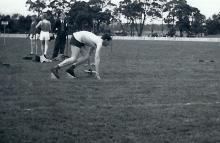
Yallourn High School (YHS) Athletics - Richard Bush
Year (OLD)
1960
YHS Athletics - Richard Bush

YHS Athletics - Richard Bush
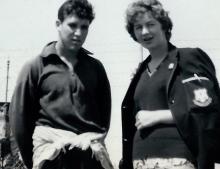
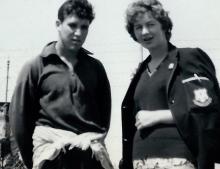
Jim McArthur & Beryl Duncan - YHS House Captains
Source: Barbara Davine
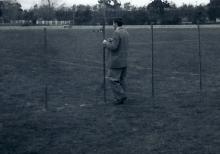
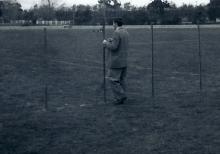
Jim Dooley - on duty on Sports Day at YHS
Source: Barbara Davine
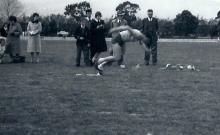
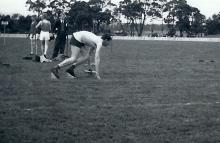
YHS Athletics
Source: Barbara Davine
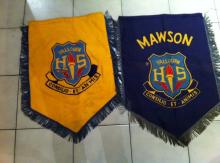
1945 - BASS HOUSE WINS THE YALLOURN HIGH SCHOOL SPORTS
The following extract was published in the ‘Morwell Advertiser’ in October, 1945 and reports on the inaugural athletics day of the Yallourn High School. The Yallourn High School, previously known as Yallourn Higher Elementary School, first ‘opened its doors’ in February 1945.
In 1945 there were about 300 students enrolled at YHS and each student belonged to one of four ‘houses’. House systems were common in Australian schools in earlier times and their existence can be traced back to the traditions of many English schools.
Note: At YHS, the four houses were named after famous Australian explorers: Bass, Flinders, Phillip and Mawson. The house banners of YHS were noted for the colourful and distinctive designs (Bass: Yellow, Flinders: Green, Phillip: Red and Mawson: Blue).
There were more than forty events on the sports program that day; and they were grouped into three main divisions for boys and girls: Junior, Intermediate and Senior.
Points were awarded in each event; and the ‘novelty’ events would have provided a few laughs during the action-packed day. The Girls’ Early Morning Race is somewhat of a ‘mystery’ and perhaps one of readers can clarify what that event entailed.
In 1945 Bass House won the athletics sports with Mawson finishing in second place, 30 points behind the winner.
Note: My apologies for spelling errors of any family names when transcribing from the original newspaper article (Roger).
OCTOBER 25th 1945 ‘MORWELL ADVERTISER’ PAGE :4
YALLOURN HIGH SCHOOL SPORTS.
The first annual sports meeting of the Yallourn High School was held on Thursday, October 11th. There was a fair attendance of parents and visitors. The events were keenly contested throughout.
The results were:
• Boys' Junior High Jump: H. Chessum (F) 1, P. Ashley. (B) 2.
• Girls' Senior 100 Yards: S. Brooker (B) 1, M. Burley (B) 2.
• Boys' Senior 100 Yards: M. Chamberlain (M) 1, G. Matfin (P) 2.
• Girls' Inter. 100 Yards: G. Gilchrist (F) 1, J. Pollock (F) 2.
• Boys' Inter, 100 Yards: J. Nix (M) 1, A. Burrage (P) 2. Girls'
• Sub-Inter. 100 Yards: A. Davis (B) 1, J. Wiggins (F) 2.
• Boys' Senior Long Jump: G. Matfin (P) 1, M. Chamberlain (M) 2.
• Girls' Junior 75 Yards: A. Burne (P) 1, A. Tonkin (B) 2.
• Boys' Inter. High Jump: A. Turnbull (P) 1, J. Watt (F) 2.
• Girls' Sub-Junior 75 Yards: G. Ahlstrom (M) 1, P. Esler (M) 2.
• Boys' Junior 75 Yards: H. Chessum (F) 1, P. Ashley (B) 2.
• Girls' Junior Cross-Ball: Flinders 1, Phillip 2.
• Girls' Inter. Cross-Ball: Flinders 1, Bass 2.
• Girls' Junior Cross-Ball: Mawson 1, Flinders 2.
• Boys' Senior 220 Yards: G. Matfin (P) 1, K. Cooper (B) 2.
• Girls' Senior 75 Yards: S. Brooker (B) 1, M. Burley (B) 2.
• Boys' Inter. 75 Yards: A. Burrage (P) 1, J. Watt (F) 2. Girls'
• Inter. 75 Yards: G. Gilchrist (F) 1, F, Lawson (M) 2. Boys'
• Junior 100 Yards: H. Chessum (F) 1, L. Castanelli (MI) 2.
• Girls' Junior 50 Yards: A. Burne (P) 1, E. Jacgung (B) 2.
• Boys' Senior High Jump: G. Matfin (P) and A. Leviston (B) equal first.
• Boys' Inter. Long Jump: R. Selby-Hele (B) 1, A. Burrage (P) 2.
• Girls' Sub-Junior 50 Yards: G. Ahlstrom (M) 1, P. Esler (M) 2.
• Girls' Sub-Inter. 75 Yards: A. Davis (B) 1, J. Wiggins (F) 2.
• Girls' Senior Skipping Relay: Bass 1, Mawson 2.
• Girls' Inter. Skipping Relay: Bass 1, Mawson 2.
• Girls' Junior Skipping Relay: Bass 1, Mawson 2. Boys' Junior Long Jump: P. Ashley (B) 1, L. Glaister (P) 2.
• Boys' Senior 440 Yards: G. Matfin (P) 1, K. Cooper (B) 2.
• Boys' Inter. 220 Yards: A. Burrage (P) 1, J. Nix (M) 2.
• Girls' Senior Leader Ball: Bass 1, Flin ders 2.
• Girls' Inter. Leader Ball: Bags 1, Phillip 2.
• Girls' Junior Leader Ball: Flinders 1, Mawson 2.
• Boys' Slow Bicycle Race: W. McIntyre (F) 1.
• Girls' Open Hockey Dribble: Mawson 1. Flinders 2.
• Girls' Open Potato Race: K. Hayes (B) 1, G. Gibson (F) 2.
• Girls' Early Morning Race: B.' Minor (B) 1, C. Garvin (B) 2.
• Boys' "A" Circular Relay: Mawson 1, Bass 2.
• Boys' "B" Circular Relay: Flinders 1, Phillip 2.
• Girls' Senior Flag Race: Bass 1, Phil -Mawson 2.
• Girls' Inter. Flag Race: Mawson 1, Bass
• Girls' Junior Flag Race: Bass 1, Phillip 2.
• Girls' Slow Bicycle Race: B. Ferguson (B) 1, V. Hamilton (F) 2.
• Boys' 880 Yards Handicap: H. Chessum (F) 1, L. Castanelli (M) 2.
• Boys' Inter. 440 Yards: A. Burrage (P) I, A. Morrison (B). 2.
House totals:-
• Bass House: 173½points, 1st
• Mawson House: 143 points, 2nd
• Flinders House: 137½ points, 3rd
• Phillip House: 125 points, 4th
FOOTNOTES…
1. Although not stated in the article, the sports were probably held on one of the two major ovals of the town.
2. On the first day of the 1945 school year at the YHS, it is documented that 300 students enrolled and this number increased rapidly in the post-war years. Figures show that by 1953 the enrolment of YHS had almost doubled.
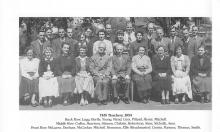
3. When the Yallourn High School opened for first time on 6th February 1945, John Menadue was the Headmaster and Ms A. Callinan was the Senior Mistress. Other staff at the school, in that inaugural year of operation, included: Mr E. Graham, Miss A. Jensen, Miss J. Stephens, Miss K. M. Hewitt, Miss K. Rumbold, Miss I. N. Kemp, Mrs M. Scherm, Mr L. Young, Mr J. Coffey and Miss E.J. Barclay.
4. In the boys’ events, the name J. Nix appears on several occasions. In 1945, John Nix lived in Trafalgar; and he was just one of 140 students who travelled, by bus each day, from Morwell, Moe, Traralgon, Brown Coal Mine (i.e. Yallourn North), Yinnar and Trafalgar to study at the Yallourn High School. John Nix was a brilliant athlete who later played 95 games with Richmond Football Club; and, in time, won a handsome reputation as a football coach at Sale, Mornington, Koo Wee Rup, Dromana and Richmond Reserves.
5. Jim Watt (see above - Intermediate boy’s events) is featured in a story about the Yallourn Football Club which was posted on this website in 2012.
6. With the Japanese surrender, to the Allied Command on September 2nd 1945, World War:II thankfully came to an end. The Yallourn High School sports day was held a month after that significant moment in world history; and it is fair to assume that it would have been a very happy occasion for students and teachers as the heavy mantle of dread was lifted from everyone’s shoulders and all people looked to the future with greater optimism…
“ When we got the news on the wireless that the war was over, everyone gathered together at the town centre singing, laughing, crying , talking , all so happy having a wonderful time.” Source: Marge (Ebsworth) Dixon- YOGA Publication 1996. Page: 48.
7. As can be seen from the above newspaper article, school athletics meetings have changed markedly over the years. Events such as cross-ball, skipping relay, potato race, flag race, hockey dribble, slow bicycle race and leader ball are reminders of a by-gone era. Hurdles and field events such as discus, javelin, shot putt and triple jump became part of secondary school athletics programs in later years.
8. The 1956 Melbourne Olympic Games were a catalyst to a greater emphasis in athletics in school sports programs and local clubs (e.g. Yallourn Amateur Athletics Club which was formed in 1951).
9. Younger readers may not be aware that, in 1956, Yallourn hosted a ‘Mini Olympics’ and it was imposing sporting spectacle. It is documented that some thirteen thousand people visited Yallourn to watch the program of events which included numerous international Olympians.
10. According to Richard Bush (ex-Yallourn High School student), Mr Keith Hollingsworth, former teacher, provided great impetus to the athletics program at YHS in the early 1960’s. Mr Hollingsworth is given credit for purchasing new sports equipment (e.g. hurdles, javelins, discus etc.). Richard spoke very highly about the role that Mr Hollingsworth played in lifting the profile of athletics at YHS.
11. In modern times, school athletics meetings are highly organized and coordinated; and the winners of given events at school level have the opportunity to then compete at regional, state, national and international level. Brenda Jones, a former student of Yallourn High School, won a Silver Medal (in the 880 yards) at the Rome Olympics in 1960. A photo and story regarding Brenda can be found on this website.
“ Brenda Jones (born November 17, 1936 in Leongatha, Victoria) is a former Australian middle distance runner, who after her marriage became known as Brenda Carr. At the 1958 Australian championships Jones won the 440 yards and 880 yards races. In 1960 she only managed a fifth place in 440 Yards but won a silver medal in 880 Yards. The same year, the 1960 Summer Olympics were contested in Rome, and Jones won a silver medal in 800 metres behind Lyudmila Shevtsova…” Source: Google Books
12. Yallourn High School had a proud history of developing successful sportspeople; and there are numerous stories and team photos on this website. To read more about he achievements of YHS students in athletics and other sports ….TYPE in the word: ‘athletics’ in the search field, at the top right-hand corner of the screen, and then press: ENTER.
‘THANK YOU’ TO RICHARD BUSH & BARBARA BUNTING ( DAVINE)
• Thanks to Richard Bush (ex-YHS) for the information about Mr Hollingsworth and other aspects of sport at Yallourn High School. Richard was an enthusiastic member of the YHS Athletics Team in the 1960’s and he can be seen in several YHS photos of that period. Richard was also the vice-captain of Bass House in 1960.
• A ‘thank you’ also to former YHS student Barbara Bunting ( Davine) for kindly providing the Virtual Yallourn website with the photos which accompany this story. Barbara has many fond memories of her times and friends at YHS.
The above story is part of an on-going project regarding the history of Yallourn. The story was researched and written by Roger Spaull and presented and posted by Julie George for the Virtual Yallourn website in February 2018.
The above article from the ‘Morwell Advertiser’ newspaper has been faithfully reproduced. The only amendments to the original copy are the font style, font size and spacing, so as to enhance the article for purposes of posting on the Virtual Yallourn website.
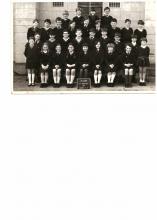
St Therese's Catholic primary school grade 3 and 4 - 1970
Front Row: Kim Powell, XX, XX, Louise D'Alterio, Tanya Louison, Anne Fanning, XX, Rhonda Curtis, Bernadette Laird
Second Row: Tim D'Alterio, Robert Tarraran, Murphy, Greg Wiggins, XX, Ray Lovison, xx, Marcus Heriban
Third Row: xx, Robert Rodgers, Robert Smart, Claire Murphy, Maureen Tun, xx, John Broberg, Peter Laird, Burke
Rear: Burke, Darrel Larsen, XX, Paul Dougan
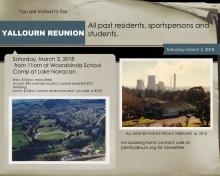
Everyone with a connection to Yallourn WELCOME. For more information, go to www.yallourn.org and click on "Reunions". See who else has paid up so far by following the link.
Pre-booking is essential by Friday, 16 February
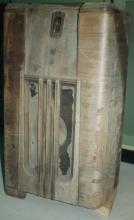
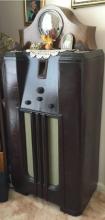
A Stromberg-Carlson A.C. Dual-Wave Radio Model 635 from Yallourn – by Ken Tate
In 1936 my grandfather, Sid Tate, bought a new Stromberg-Carlson A.C. Dual-Wave Radio Model 635 from the local radio repair man in Yallourn (a nearby neighbour), with the money he earned from working overtime at the Yallourn Power Station. This provided news and entertainment for the family and was very useful during the War listening to the BBC on the short wave band as they had family in England. When the radio repair man retired, he let my father Ray who was experimenting with radio, to help himself to anything he wanted from under the house in the way of valves, components, etc.
My grandfather was a welder by trade but experimented in making his own pickup cartridges to enable him to play records through the PU input of the radio, however the radio audio amplifier did not have enough gain to be successful and would have required a preamp. Eventually he converted the Stromberg into a radiogram by splitting the cabinet and widening it to add a turntable.
The now Stromberg radiogram was eventually handed down to my father and when a new Precedent Radiogram was purchased the Stromberg was retired to the back shed. This is about the time I remember the Stromberg Carlson shortly before the radio chassis was extracted and kept whilst the remainder went to the tip, as we were shifting house.
I set up the Stromberg chassis in my bedroom as a teenager in the late 1960’s, as I was dabbling in electronics which had rubbed off from my father after he made me a two transistor bedroom radio in my younger years. We used a 15W globe in place of the power supply filter choke on the Stromberg as I only had a permanent magnet speaker at the time. I managed to get an electric shock from the exposed terminals on the tuning signal strength meter, which dad promptly removed.
In 1975 we shifted house again and the Stromberg ended up in the garden shed at the new house for many years. In the early 1990’s I placed a wanted advertisement in the HRSA newsletter for a cabinet or photos and dimensions so I could have a replica cabinet built for the Stromberg Carlson but no one come forward.
I also remembered Arthur Hamilton from Yallourn used to have a Stromberg Carlson hanging up on the wall of his open fronted garage which had severe weather damage down one side, this was around 1971 as I used to be friends with his sons. However the SECV town of Yallourn was demolished for the brown coal under it to supply the Yallourn Power Stations and all the residents had to move out. I tracked down Arthur’s youngest son and asked him about the radio, he did not remember it but said his father moved to Bendigo and would most likely still have it. I contacted Arthur and he agreed to sell me the Stromberg Carlson for $75 and even delivered it as he was coming down my way in the near future. I don’t know how I knew or remembered from 20 years earlier that Arthurs Stromberg Carlson was the same model as my grandfathers but it was… maybe the dial, tuning indicator and knob layout was the clue burnt into my brain.
I then had a friend who was handy with timber refurbish the cabinet, most of the veneer was missing on the weathered side plus other damage and it was missing one leg. Then when my parents went on their annual Queensland holiday I secretly removed our original Stromberg Carlson chassis from their garden shed. I replaced the necessary caps and the detector/1st audio valve (75) as it was missing its top cap and then fitted our original chassis to its new cabinet.
Then on my father’s 65th birthday I presented it to him gift wrapped which was quite a surprise and it now resides in his study and the chassis from Arthur's set is safely stored in a cupboard in my shed.